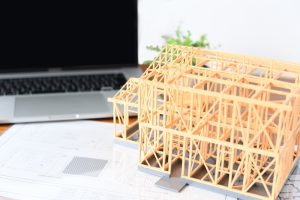
Designing a scale model is both a technical and creative process. It blends digital engineering with hands on craft so the final piece communicates an idea with clarity and impact.
As a leading UK scale model making company, JH May approaches every commission as a collaboration that turns a sketch, CAD file or full size product into a precise and beautifully finished miniature or a dramatic upscaled centrepiece.
The Scale Model Maker Process
Below is a plain English walkthrough of how professional scale models are designed, from first brief to final polish.
1. Start with the brief
Every successful model begins with a well defined purpose. Is it for a trade exhibition, a board pitch, a museum display, a wind tunnel test or a product launch photo shoot. The use case drives key decisions such as:
- Scale and footprint
- Required level of detail and realism
- Whether parts should move or illuminate
- Transport, handling and durability needs
- Budget and lead time
Agreeing these early helps the design team recommend the right manufacturing routes and materials.
2. Capture the geometry
Designing a model means capturing the exact form of the subject. There are three common routes:
- Client CAD: If you already have 3D production data, the team can scale it to the required size and prepare it for manufacturing. Modern 3D modelling allows accurate upscaling or downscaling and then feeds a range of production methods such as CNC milling, turning and rapid prototyping. This improves precision on large models and retains fine detail on small ones, while speeding up delivery.
- 3D scanning: When CAD is missing or incomplete, engineers can scan the real object. JH May offers in house and mobile 3D laser scanning, and can convert scans into usable files in formats such as STL, OBJ, IGES, STEP and SolidWorks parts. That data can then be turned quickly into real world components, including upscaled exhibition pieces or reverse engineered parts. (JH May)
- From scratch: If there is no original to scan, designers can build a 3D model in SolidWorks from drawings or sketches, ready for manufacture. (JH May)
3. Choose the manufacturing route
With geometry in place, the design team selects processes that balance accuracy, strength, surface quality and cost.
- CNC machining: Ideal for structural accuracy, large components and high quality surfaces. Using 3, 4 and 5 axis CNC and software such as Delcam Powershape and Powermill, JH May machines complex shapes from materials like aluminium, high density tooling board and carbon fibre. If CAD is not available, it can be created first in SolidWorks.
- 3D printing: Best for intricate forms and complex assemblies. For large 3D prints, the two primary processes are SLS and SLA. Parts can be split into printable sections and bonded, then finished so joins are invisible and strength matches a single piece print.
- Vacuum casting: Excellent for short runs of identical parts, realistic plastics and rubber like components. It is a cost effective low volume method that benefits from fast 3D printed master patterns and offers many material and surface options, from polished to textured finishes.
Other methods like laser cutting, GRP moulding, vacuum forming, metal and acrylic fabrication are combined as required so the model meets the brief without over specifying or overspending.
4.Select materials that suit the job
Material choice follows function. Machined aluminium or carbon fibre might be used for strength and stability. High density model board is common for large accurate forms. SLA or SLS resins capture fine detail.
Polyurethane resins in vacuum casting can be pigmented to any colour and even filled with powders to mimic metals or stone. The right combination ensures the model looks authentic, travels well and is practical to build within the timeframe.
5. Engineer the scale and the structure
Scaling is not simply a percentage change. Designers consider wall thickness, the visibility of small features, safe clearances for fixings and how the model will be handled. Large pieces are subdivided into modules with hidden joints and internal frames.
For 3D printed builds, the design stage includes planning split lines and bonding strategies so the final assembly is seamless once finished and painted
6. Detail for realism and storytelling
A strong model tells the right story. That can mean machining or printing crisp panel lines, adding clear or tinted acrylic glazing, incorporating LEDs, or creating interchangeable components that show internal mechanisms. Graphics, logos and screen accurate colour schemes are specified during design so the finishing team can reproduce them faithfully.
7. Make the parts

Once the digital design is signed off, manufacturing begins. CNC programmes are generated, print files are prepared and silicone tools are poured for vacuum casting. The production plan sequences processes to reduce lead time. For example, large sections might be machined while smaller, high detail parts are printed and cast, ready to assemble.
8. Hand finishing and paint
Hand skills bring a model to life. Surfaces are fettled, filled and sanded, then primed for paint. JH May’s finishing team produces effects ranging from pearlescent and metallic to chrome, bronze, antique and textured finishes. Sampling ensures the exact look is repeatable at scale, and motor show standard finishes are achievable where required. Keeping paint, fabrication and model making under one roof improves quality, lead times and cost control.
Metal plating, clear coats and decals are added in a controlled sequence, followed by final polishing and quality checks under consistent lighting.
9. Assembly, testing and protection
Models are dry fitted first to check alignment, motion and lighting. Fixings are chosen to tolerate transport and repeated handling at events. Clear cases, plinths and flight cases are designed alongside the model to protect it between venues. The team also plans installation so the piece arrives ready to present.
10. Real world scenarios
Design choices vary depending on whether you are scaling up or down:
- Upscaling for impact: For a giant exhibition piece, engineers may start with a consumer product and scan it, creating robust upscaled components that can be machined and finished to a high gloss with accurate graphics. JH May has delivered this approach on display items that needed to be ten times the original size and durable enough for global trade shows.
- Downscaling for demonstrations: Where the real equipment is too large or impractical to transport, a compact 1:10 model built from production CAD can retain impressive detail, communicating complex features to visitors without the logistical burden of moving the full scale product.
11. Why partner with a specialist
A full service model maker streamlines the entire journey. JH May’s team can take you from scan or sketch through CAD, 5 axis CNC, SLA or SLS printing, vacuum casting and paint finishing, all coordinated by one project manager. This integrated approach delivers accurate, robust and visually stunning models across sectors that range from vehicles and aircraft to industrial and marine equipment.
Scale models succeed when engineering precision and craft finishing work hand in hand. Define the goal, capture the geometry, select the right processes and materials, then let skilled makers shape, finish and assemble the parts into a single coherent story.
If you are planning a model for an exhibition, a stakeholder demo or a technical test, JH May’s designers and makers can guide you from idea to installation with speed and care. Contact us today to discuss your project.