
You have just been told a scale model is needed. Maybe it is for a planning committee in five weeks. Maybe an investor pitch in three. Maybe a launch event where the date cannot move, the venue is booked, and the model is now the missing piece. The first question is almost always the same.
How quickly can this actually happen?
That question deserves an honest answer. Commissioning a scale model is not a black box, and the timeline is shaped by far more than how busy a workshop is. It is shaped by how the brief is written, how decisions get made, and crucially, how much of the production happens under one roof.
This guide walks through what really happens when you commission a scale model, stage by stage. It is written for people doing it for the first time, and for those who have worked with fragmented suppliers before and are wondering why the process felt slower than it needed to.
Why the timeline question always comes up first
Most clients ask about turnaround before they ask about anything else. The deadline is usually fixed. The budget has some flex. The brief can be refined. But the date the model needs to exist by is rarely negotiable.
Three things genuinely shape that timeline.
The first is scope. A 1:200 massing model of a single building is a different proposition to a 1:50 presentation model with full landscaping, glazing, and lighting.
The second is finish level. A study model and a presentation model can share the same dimensions and still take very different amounts of time.
The third, and the one most clients underestimate, is how fragmented the supply chain is.
When a model making studio sends parts out to external CNC shops, separate paint sprayers, and third-party printers, every handover adds queue time. Days disappear waiting for slots in someone else’s schedule.
JH May runs every discipline in-house, which is the single biggest reason urgent projects move quickly here.
Stage one, the brief that saves you weeks
A strong brief is the most powerful tool a client has for protecting their own deadline. It is not about producing a polished document. It is about being clear on the things a workshop cannot guess.
What is the model for. Who will see it. How close will they get. Will it be touched, lit, transported, photographed, or all of the above. What is the deadline, and is it the date the model is delivered or the date it needs to be on site. What does the budget look like as a bracket, even a rough one.
You do not need finished CAD to commission a scale model. Sketches work. Photographs work. Reference images of similar projects work. Verbal direction in a phone call works. Many of the projects in our case studies started with far less than the client thought was required.
What to send and what not to worry about
Send whatever you have. Drawings, files, photographs, dimensions, brand colours, and any non-negotiables such as a fixed installation date or a venue restriction. If something is missing, it can be solved together at scoping stage. What slows projects down is not gaps in the brief. It is gaps that nobody flags until production has started.
Stage two, quoting and scoping the work
A single figure rarely exists on day one, and any studio that quotes one before understanding the scope is guessing. The conversation that follows the brief is where the real shape of the project gets defined.
The main cost drivers are detail level, finish, materials, and scale. A small, highly detailed model can cost more than a larger, simpler one. A model destined for a six-month exhibition tour needs different engineering to one that sits behind glass at a single event. A piece that will be touched by the public needs different finishing to one viewed from two metres away.
Because every discipline at JH May sits in the same building, indicative quotes come back quickly. There is no waiting for three external suppliers to return their own estimates.
This matters most on urgent work, where a few days lost at quoting stage cannot be recovered later. The giant replicas guide covers a related set of scoping patterns for drinks brands, and many of the same principles apply across other sectors.
Stage three, design development
Once the scope is locked, the project moves into design development. This is where the brief becomes a working production plan. CAD modelling happens here. Test prints and material samples get produced. Finish references are agreed. Review points are built in so the client signs off the direction before any expensive fabrication starts.
This stage protects everyone. It is far faster to revise a digital model or a sample swatch than to repaint a finished piece or remake a component. For urgent projects, design development can be compressed, but only when the brief is strong enough to support that. Vague briefs cannot be rushed through this stage without consequences later.
Stage four, fabrication under one roof
This is where the speed of a JH May project genuinely comes from, and it deserves a clear explanation.
A typical commission moves through several fabrication disciplines. CNC machining handles precision parts and structural components. 3D printing produces complex geometry and detail that would take days to cut by hand. GRP moulding creates hollow or large-format forms. Hand finishing pulls everything together with the surface quality that defines a presentation-grade model.
In a fragmented supply chain, each of those stages happens in a different building, often in a different town, with parts shipped between them. Every handover is a chance for the project to wait. In an integrated workshop, parts move from one bench to the next without queue time. That is where the days come back.
The work itself is not faster. The same CNC pass takes the same number of hours regardless of where it happens. What changes is the time between stages, and on tight projects that is often the difference between hitting the deadline and missing it.
Where speed genuinely comes from
Fast turnaround is not about cutting corners. The quality standards do not change because the deadline is tight. What changes is the queue. Removing handover time between disciplines is how a workshop delivers in weeks what fragmented competitors quote in months. JH May’s high speed service is built around exactly this principle.
Stage five, finishing and quality control
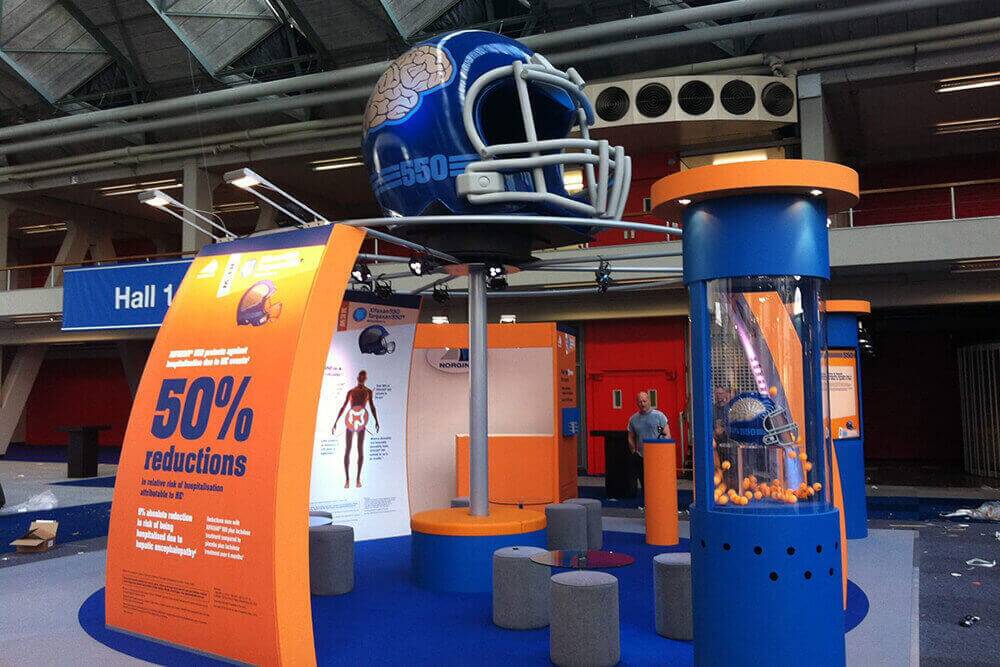
Finishing is where a scale model stops looking like a fabricated object and starts looking like the thing it represents. Paint finishing is the visible part, but hand detailing, lighting integration, glazing fits, and base or plinth work all happen here too.
This is also where internal quality control sits. Before a model goes to a client review, it is checked against the brief, the drawings, and the agreed finish references. Any corrections happen in the workshop, not at the client’s office. For bespoke scale models, this stage often defines whether the piece feels presentation-grade or merely accurate.
Stage six, delivery, installation, and beyond
Transport and installation are easy to overlook at brief stage and difficult to fix later. A large architectural model needs a route into the venue. A piece for an exhibition tour needs crating that can survive repeated handling. International shipping needs paperwork and timing that should be scoped at the start, not the week before launch.
JH May handles crating, transport, and on-site installation as part of the commission where required. For exhibition models in particular, this matters. A model that arrives damaged or late has failed regardless of how well it was built.
Most scale models also have a life beyond their first outing. Refurbishment, modification for reuse, and storage are all worth raising at brief stage. A model designed for reuse from the start is cheaper to refurbish later than one that was built for a single event.
What slows a project down and what does not
The real culprits behind missed deadlines are almost never the workshop. They are late brief changes, slow approvals on the client side, undefined transport requirements, and last-minute additions that were not part of the original scope. None of these are fatal when they are caught early. All of them are difficult to absorb when they land in the final week.
An experienced studio will flag these risks at scoping stage. The studios that move fastest are the ones that own the whole process, see the project end to end, and tell clients honestly where the pressure points are.
When to start the conversation
The single most useful thing a client can do is start the conversation early, even before the brief is fully formed. Early scoping protects the deadline more than any single production decision made later in the project. It also opens up options that disappear as the date approaches.
If a scale model is on the horizon for a planning submission, a launch, a pitch, or an exhibition, the time to pick up the phone is now, not when the brief is signed off.
The short version, before you pick up the phone
Commissioning a scale model comes down to three things. A clear brief, a workshop that owns every stage of the production, and an early conversation. Get those right and a tight deadline stops being a problem. The studios that deliver fastest are the ones that have already done the thinking on every stage that follows.
Speak to JH May through our contact page when you are ready to start scoping.
Frequently asked questions
How long does it take to commission a scale model?
It depends on size, detail, finish, and how much of the production happens in one place. Studios using external suppliers tend to quote longer because work moves between separate businesses. An integrated workshop can move significantly faster on the same brief.
Can you work from sketches if I do not have CAD?
Yes. Sketches, photographs, reference images, and verbal direction are all workable starting points. Many commissions begin without a single CAD file.
What drives the cost of a scale model?
Detail level, finish, materials, and scale tend to outweigh raw dimensions. A small, highly detailed presentation model can cost more than a larger, simpler one.
Can the model be reused or refurbished later?
Yes. Many commissions are designed with reuse in mind, especially for exhibition and retail work. Refurbishment, modification, and storage are all worth raising at brief stage.
When should I start the conversation?
As early as possible, even before the brief is fully locked. Early scoping is the single biggest protection against deadline pressure later in the project.